


Futbolda Proprioseptif Duyu ve Dengenin Önemi

Bu konu üzerinde durmaya başlamadan önce, propriosepsiyon hakkında kısa bir tanımlama yapılması gerektiği kanaatindeyim ki bu daha sonra denge yetisnin tabanını oluşturacaktır.
Latince “proprius” dan “kişinin kendi”, “bireysel” alıgılaması anlamına gelen propriyosepsiyon, vücudun uzaysal konumu duyusal olarak algışamasıdır (1 - aşağıdaki referanslara bakınız ). Beyin, vestibüler sisteme ek olarak, proprioseptörlerden (kas iğleri ve Golgi tendon organı gibi) gelen bilgileri genel bir eklem pozisyonu ve hareket hissine (hızlanma / yavaşlama) entegre eder.
Propriosepsiyon nasıl ölçülür?
Propriosepsiyonun pratik olarak ölçülmesi zor olduğundan, propriosepsiyonu ölçmek için bir çok yöntem vardır (18).
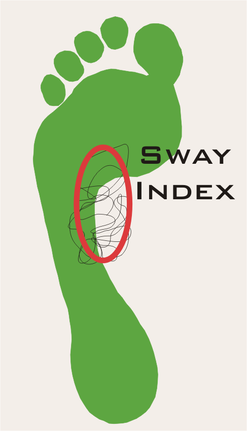
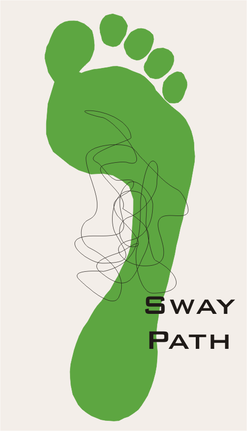
Futbolda Proprioception / Balance'ın önemi nedir?
Azalmış bir propriosepsiyon yaralanmalar için bir risk faktörü olarak görülmüştür (3) futbol sporcularında ayak bileği burkulmasının (24) bir göstergesi olarak görülmektedir.
Bu nedenle yaralanmaların önlenmesinde (12, 19, 23) ve yaralanmaların rehabilitasyonunda (5, 8, 20, 25) rol oynamıştır.
Futbolcularda ayak bileği burkulması ve diz yaralanmaları çok yaygın olduğundan (2, 30) bu vücut bölgelerinin rehabilitasyonunda proprioseptif / denge eğitimi kullanılmıştır (8, 25).
Ayrıca, eğitimin diz yaralanmaları (8, 22), ayak bileği burkulmalarını (22, 23) (zaten ayak bileği burkulmasından muzdarip olan oyuncuların) (25) ve hamstring yaralanmalarını (19) azalttığı ve genel olarak tüm yaralanmalardan korunmada (12, 21) önemli rol oynar.
Bu nedenle yaralanmaların önlenmesinde (12, 19, 23) ve yaralanmaların rehabilitasyonunda (5, 8, 20, 25) rol oynamıştır.
Futbolcularda ayak bileği burkulması ve diz yaralanmaları çok yaygın olduğundan (2, 30) bu vücut bölgelerinin rehabilitasyonunda proprioseptif / denge eğitimi kullanılmıştır (8, 25).
Ayrıca, eğitimin diz yaralanmaları (8, 22), ayak bileği burkulmalarını (22, 23) (zaten ayak bileği burkulmasından muzdarip olan oyuncuların) (25) ve hamstring yaralanmalarını (19) azalttığı ve genel olarak tüm yaralanmalardan korunmada (12, 21) önemli rol oynar.
Kaynaklar
1. Mosby's Medical, Nursing and Allied Health Dictionary. 1994.
2. Agel, J., Evans, T.A., Dick, R., Putukian, M., and Marshall, S.W. Descriptive epidemiology of collegiate
men's soccer injuries: National Collegiate Athletic Association Injury Surveillance System, 1988-1989 through 2002-2003. J. Athl. Training. 42: 270-277, 2007.
3. Alentorn-Geli, E., Myer, G.D., Silvers, H.J., Samitier, G., Romero, D., Lazaro-Haro, C., and Cugat, R.
Prevention of non-contact anterior cruciate ligament injuries in soccer players. Part 1: Mechanisms of injury and underlying risk factors. Knee surgery, sports traumatology, arthroscopy : official journal of the ESSKA 17: 705-729, 2009.
4. Alentorn-Geli, E., Myer, G.D., Silvers, H.J., Samitier, G., Romero, D., Lazaro-Haro, C., and Cugat, R.
Prevention of non-contact anterior cruciate ligament injuries in soccer players. Part 2: a review of prevention programs aimed to modify risk factors and to reduce injury rates. Knee surgery, sports traumatology, arthroscopy : official journal of the ESSKA 17: 859-879, 2009.
5. Alonso, A.C., Greve, J.M., and Camanho, G.L. Evaluating the center of gravity of dislocations in
soccer players with and without reconstruction of the anterior cruciate ligament using a balance platform. Clinics 64: 163-170, 2009.
6. Arliani, G.G., Almeida, G.P., Dos Santos, C.V., Venturini, A.M., Astur Dda, C., and Cohen, M. The
effects of exertion on the postural stability in young soccer players. Acta ortopedica brasileira 21: 155-158, 2013.
7. Brito, J., Fontes, I., Ribeiro, F., Raposo, A., Krustrup, P., and Rebelo, A. Postural stability decreases in
elite young soccer players after a competitive soccer match. Physical therapy in sport : official journal of the Association of Chartered Physiotherapists in Sports Medicine 13: 175-179, 2012.
8. Caraffa, A., Cerulli, G., Projetti, M., Aisa, G., and Rizzo, A. Prevention of anterior cruciate ligament
injuries in soccer. A prospective controlled study of proprioceptive training. Knee surgery, sports traumatology, arthroscopy : official journal of the ESSKA 4: 19-21, 1996.
9. Cerulli, G., Benoit, D.L., Caraffa, A., and Ponteggia, F. Proprioceptive training and prevention of anterior
cruciate ligament injuries in soccer. The Journal of orthopaedic and sports physical therapy 31: 655-660; discussion 661, 2001.
10. Cressey, E.M., West, C.A., Tiberio, D.P., Kraemer, W.J., and Maresh, C.M. The effects of ten weeks of
lower-body unstable surface training on markers of athletic performance. J. Strength. Cond. Res. 21: 561-567, 2007.
11. Davlin, C.D. Dynamic balance in high level athletes. Percept. Mot. Skills. 98: 1171-1176, 2004.
12. Emery, C.A. and Meeuwisse, W.H. The effectiveness of a neuromuscular prevention strategy to reduce
injuries in youth soccer: a cluster-randomised controlled trial. Br. J. Sports. Med. 44: 555-562, 2010.
13. Gerbino, P.G., Griffin, E.D., and Zurakowski, D. Comparison of standing balance between female
collegiate dancers and soccer players. Gait & posture 26: 501-507, 2007.
14. Gioftsidou, A., Malliou, P., Pafis, G., Beneka, A., Godolias, G., and Maganaris, C.N. The effects of
soccer training and timing of balance training on balance ability. Europ. J. Appl. Physiol. 96: 659-664, 2006.
15. Greig, M. and Walker-Johnson, C. The influence of soccer-specific fatigue on functional stability.
Physic. Therap. Sport. 8: 185-190, 2007.
16. Gstöttner, M., Neher, A., Scholtz, A., Millonig, M., Lembert, S., and Raschner, C. Balance ability and
muscle response of the preferred and nonpreferred leg in soccer players. Motor Control 13: 218-231, 2009.
17. Hrysomallis, C. Relationship between balance ability, training and sports injury risk. Sports. Med. 37:
547-556, 2007.
18. Hrysomallis, C. Balance ability and athletic performance. Sports. Med. 41: 221-232, 2011.
19. Kraemer, R. and Knobloch, K. A soccer-specific balance training program for hamstring muscle and
patellar and achilles tendon injuries: An intervention study in premier league female soccer. Am J Sports Med 37: 1384-1393, 2009.
20. Lephart, S.M., Pincivero, D.M., Giraldo, J.L., and Fu, F.H. The role of proprioception in the
management and rehabilitation of athletic injuries. Am. J. Sports. Med. 25: 130-137, 1997.
21. Malliou, P., Giofisidou, A., Pafis, G., Beneka, A., and Godolias, G. Proprioceptive training (balance
exercises) reduces lower extremity injuries in young soccer players. Journal of Back and Musculoskeletal Rehabilitation 17: 101-104, 2004.
22. Mallo, J. Effect of block periodization on performance in competition in a soccer team during four
consecutive seasons: A case study. International Journal of Performance Analysis in Sport 11: 476-485, 2011.
23. McGuine, T.A. and Keene, J.S. The effect of a balance training program on the risk of ankle sprains in
high school athletes. Am. J. Sports. Med. 34: 1103-1111, 2006.
24. McHugh, M.P., Tyler, T.F., Tetro, D.T., Mullaney, M.J., and Nicholas, S.J. Risk factors for noncontact
ankle sprains in high school athletes: the role of hip strength and balance ability. Am. J. Sports. Med. 34: 464-470, 2006.
25. Mohammadi, F. Comparison of 3 preventive methods to reduce the recurrence of ankle inversion
sprains in male soccer players. Am. J. Sports. Med. 35: 922-926, 2007.
26. Paillard, T. and Noe, F. Effect of expertise and visual contribution on postural control in soccer.
Scandinavian journal of medicine & science in sports 16: 345-348, 2006.
27. Paillard, T., Noe, F., Riviere, T., Marion, V., Montoya, R., and Dupui, P. Postural performance and
strategy in the unipedal stance of soccer players at different levels of competition. J. Athl. Training. 41: 172-176, 2006.
28. Rozzi, S.L., Lephart, S.M., Gear, W.S., and Fu, F.H. Knee joint laxity and neuromuscular characteristics
of male and female soccer and basketball players. Am. J. Sports. Med. 27: 312-319, 1999.
29. Söderman, K., Werner, S., Pietila, T., Engstrom, B., and Alfredson, H. Balance board training:
prevention of traumatic injuries of the lower extremities in female soccer players? A prospective randomized intervention study. Knee surgery, sports traumatology, arthroscopy 8: 356-363, 2000.
30. Walden, M., Hagglund, M., and Ekstrand, J. Injuries in Swedish elite football--a prospective study on
injury definitions, risk for injury and injury pattern during 2001. Scand J Med Sci Sports 15: 118-125, 2005.


0 yorum:
Yorum Gönder